One source for the whole brand
The site, the ad set running that week, the deck for a customer call, the newsletter. All of it draws from the same source, so a change lands once and turns up everywhere it belongs.
Most brands live in a PDF, or in one person's head, while the work happens somewhere else. That gap is where good work gets diluted between the idea and the launch.
I close it by building the brand as a working design system: the rules, the reasoning, and the production tools in one place. AI runs the system. It does not make the creative.
Total: one creative lead, owning brand infrastructure that used to take a team.
The screens on this page show a white-label version of the same system, loaded with two public brands, Linear and Mailchimp. They are demos I built on my own from each company's published brand guidelines. I am not affiliated with either company, and neither is a client.
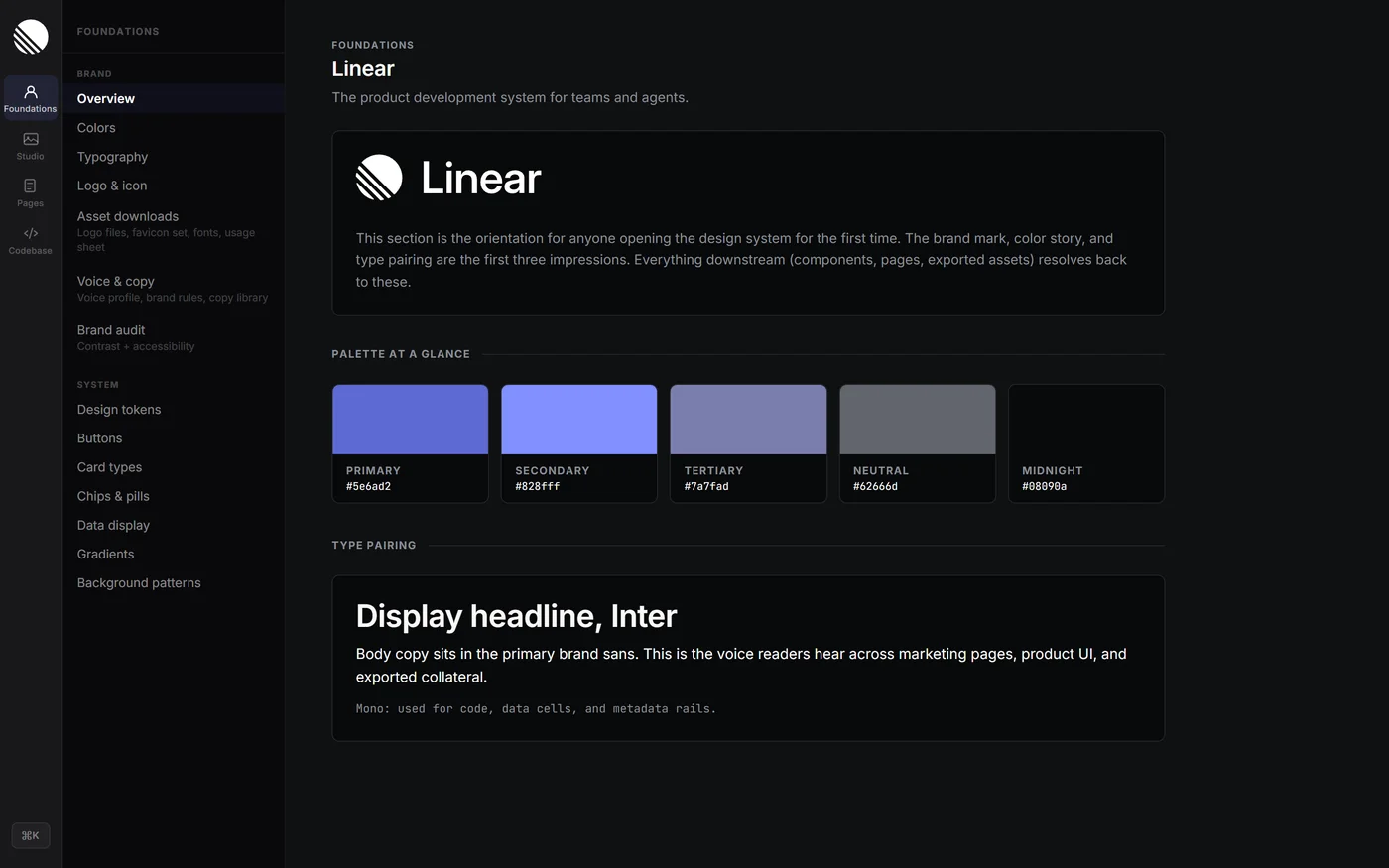
The core is the brand, written down. It lives in a repository the company owns, in plain language, and the AI tools the team already uses read from it.
The site, the ad set running that week, the deck for a customer call, the newsletter. All of it draws from the same source, so a change lands once and turns up everywhere it belongs.
How headlines should sound. What each color means. Which layouts are approved for which formats, and why. Judgment recorded with its reasoning, so people and AI tools both inherit it.
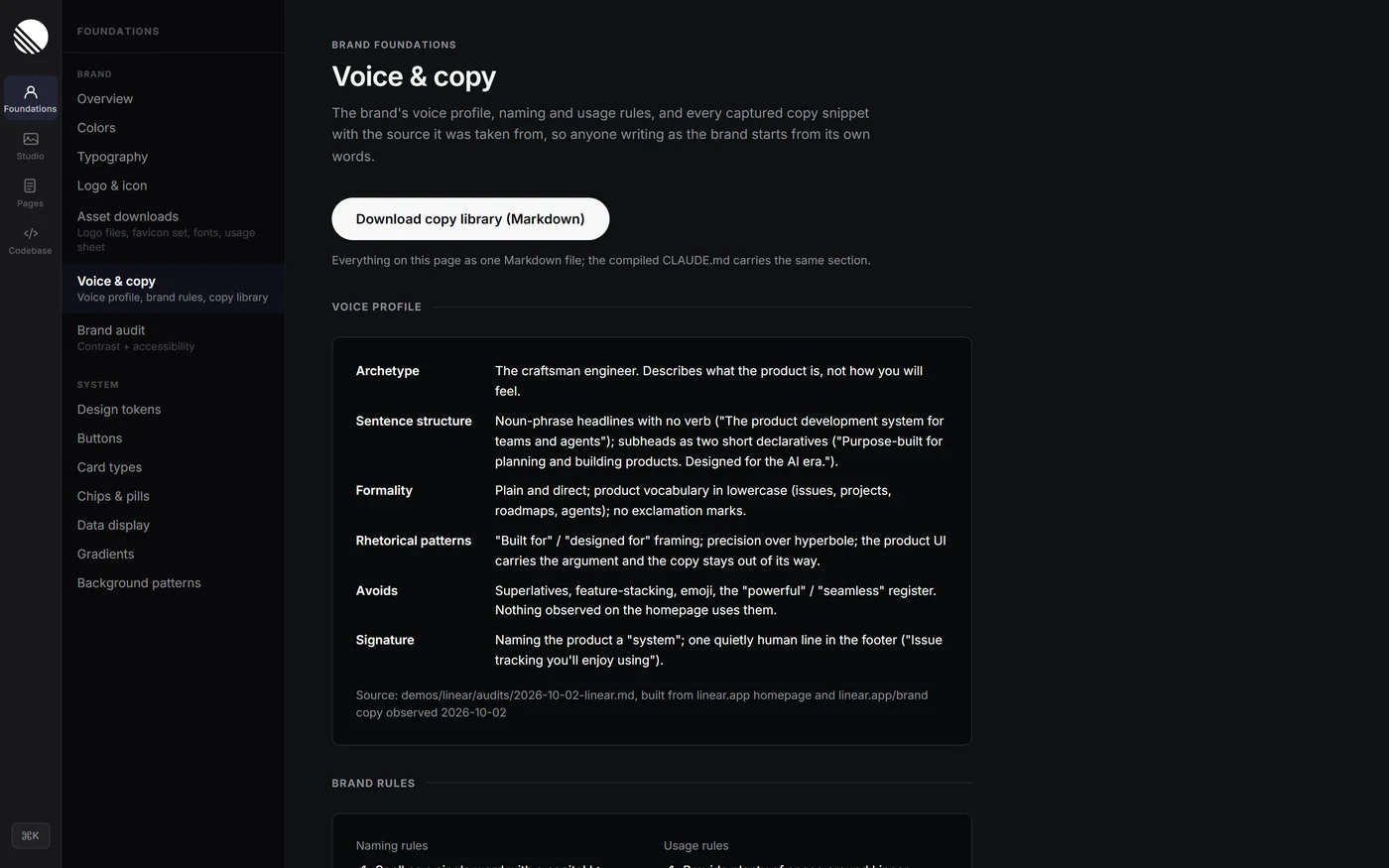
Connect a team's AI tools to the system and a colleague can make a one-pager or a slide that looks like it came from the brand team. Nobody waits on the designer.
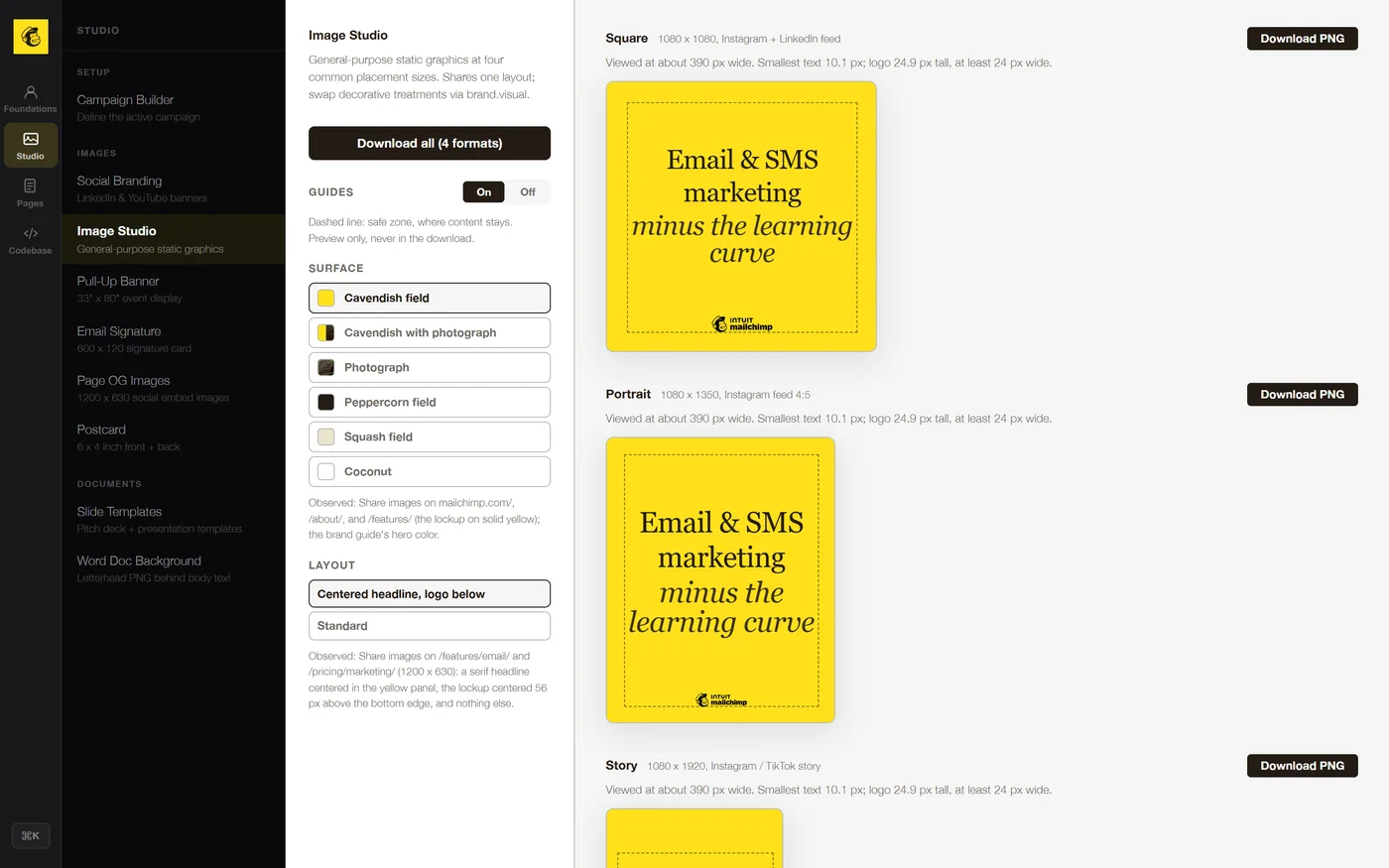
Approved layouts for every format a campaign needs. Copy and imagery go in. Ads, carousels, decks, and print-ready PDFs come out. The words, images, and layouts stay human.
The system builds new pages into Webflow and stages them for review, then watches the published site and flags drift. Nothing goes live without approval. The labor comes off the plate. The decision stays on it.
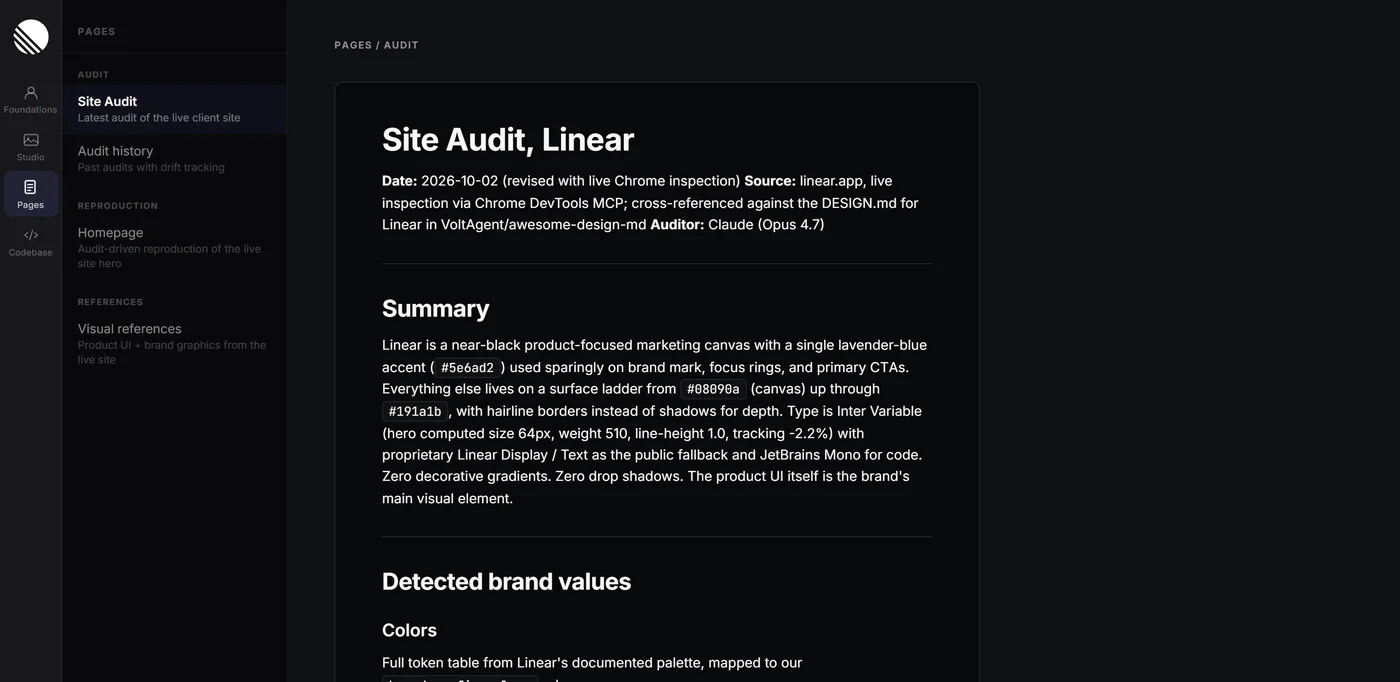
Buyers now ask an AI model about a category instead of searching. I set the site up for AI crawlers and track how the brand gets described. Brand has two audiences now. Only one of them has eyes.
I build it inside the company's own accounts, from its site, its brand guide, and its existing campaign work. Then I connect the AI tools the team already uses and test them on real deliverables.
When it is running, my access comes out. The system belongs to the company and works without me. If the brand changes, or a team wants more built on top, I come back for that.
Production stops setting the ceiling. One research campaign needed a landing page, a web PDF, a print edition, paid ads, carousels, and video thumbnails. It shipped from one person, no agency. When a stat changed, it was updated once and every format followed.
The brand stops drifting. Brands drift because the rules and the work sit in different places, and somebody is always in a hurry. Put the rules where the work happens and drift becomes a list, not a feeling.
The brand team stops being the bottleneck. Less of the week goes to being the person everyone waits on. More goes to writing the rules well enough that nobody has to wait.
The judgment outlasts the meeting. Rules that come without reasons get bent the first time they are inconvenient. Here the reasons travel with the rules.
Nobody has settled on a name for this work yet. Design engineer gets at the building. Design systems architect gets at the scope. Creative director gets at the judgment. Producer gets at the making.
The making comes first. I am a creative producer at heart. Motion, video, brand identities, full campaigns: fifteen years of making the work by hand, long before any of this existed. The showreel is the receipt.
That foundation is the whole point. You cannot write down what good looks like until you have made enough of it to know. A system like this is only as good as the taste it was built from.
My definition: the person who designs the system a brand runs on, and keeps it connected to every place the brand shows up.
I make the creative.
AI runs the system that keeps it ours.
Fifteen years across motion design, brand systems, and creative ops. Built creative at teams later acquired by Optimizely (via Zaius) and Paddle (via ProfitWell). Former instructor at SNHU. Now leading Brand & Creative at Cloud Capital.
Thank you. Keep this receipt.
Linear and Mailchimp are trademarks of their respective owners. The demo screens are independent concept work, not made for or endorsed by either company.